Tuesday, August 17, 2021

Types of Off-Road Vehicle Insurance


If you own any type of off-road vehicle, whether it's an ATV, dune buggy, dirt bike, snow mobile or golf cart, be aware that your standard homeowner's insurance likely provides you with little or no protection against it being damaged or destroyed.  This is especially true since your off-road vehicle is taken off your property.

North Carolina State Law

In the State of North Carolina, insurance is required on all registered motor vehicles.

Laws governing ATVs are similar to the laws governing motorcycles.  This means that all registered ATVs are required to carry at least a minimum amount of liability coverage, both bodily injury protection and property damage liability.  The minimums are the same as they are for motorcycles and cars:
  • $30K per person/accident bodily injury liability
  • $60K for all persons per accident
  • $25K per accident in property damage liability
Even if your vehicle is not registered because it's not used on public roads (which is illegal anyway) or public lands, having liability protection is important to have in case you're involved in an accident that's deemed your fault.  You'll be held financially responsible if you cause any property damage or injuries while using your vehicle.  Without insurance, the cost of these damages will have to come out of your own pocket.  If your off-road vehicle is registered, you'll also be required to carry insurance for uninsured/underinsured drivers.

Off-Road Vehicle Insurance

Even if your off-road vehicle isn't registered and you're not required to have insurance by law, obtaining coverage for your own protection and peace of mind is still a smart move.  There are four types of coverage that go into making of an off-road vehicle insurance policy.  These include:
  1. Bodily Injury Liability - pays toward medical costs of parties injured in an accident you cause.
  2. Property Damage Liability - pays toward the repair/replacement of property owned by a third party damaged or destroyed in an accident you cause.
  3. Collision Coverage - helps pay toward the cost of repairing/replacing your ATV if damaged in a collision with another vehicle, a tree, a fence, etc.
  4. Comprehensive Coverage - helps pay to repair/replace your off-road vehicle if it's damaged in ways other than in a collision.  This may include damage caused by weather (such as a hail storm), fire, vandalism or if your off-road vehicle is stolen.
Full protection is the safest option.  You should read and understand your policy completely.

Friday, August 6, 2021

Converting from Term to Permanent Life Insurance


People buy life insurance for lots of good reasons and, if you're like most, your reason for carrying life insurance falls into one or more of about half a dozen categories, including:
  1. The number one reason for your buying life insurance is to provide financial protection for your loved ones in the event you die prematurely.  
  2. You want to meet your financial responsibilities even after your passing.
  3. Life insurance benefits provide cash that can make up for your family's loss of your income.
  4. Benefits can be used to pay off debts left behind such as a home mortgage.
  5. Your children may have the tuition needed to attend college from your life insurance proceeds.
  6. Insurance benefits may be used to pay for your burial/funeral expenses.
Kinds of Life Insurance

There are several types of life insurance that fall into two broad categories:

Term Insurance, which is the simplest, most basic form of life insurance.  It pays benefits to your beneficiary if you die during the term of the policy, which is normally from anywhere between one and thirty years.  Most term policies provide no other benefits besides the death benefit.

Permanent Life Insurance, also called Whole Life Insurance, provides a death benefit for your whole life.  In addition, these policies accumulate a cash value that you can access after a certain period of time.  Traditional whole life insurance policies usually have a level death benefit amount and level premium cost throughout the life of the policy.

Converting Your Term Life Coverage to a Greensboro Permanent Life Insurance Policy

Term life insurance is typically sold as being the most affordable way of providing financial safety to your loved ones in the event of your unexpected death.  Because term insurance is "pure protection," unlike whole life with its cash value provision, you can get a higher death benefit for a significantly lower premium.  This is most important when families are young, with limited resources but a large need for a family financial safety net.

When your resources have increased and the need for the safety net becomes less, you may be considering converting your term policy to a Greensboro permanent life insurance policy.  Term policies typically have a provision allowing for this conversion, as long as it's done within their accepted time frame.  Simply contact your insurance agent and request a conversion.  A medical exam and going through underwriting should not be needed.

Tuesday, July 27, 2021

11 ATV Safety Tips


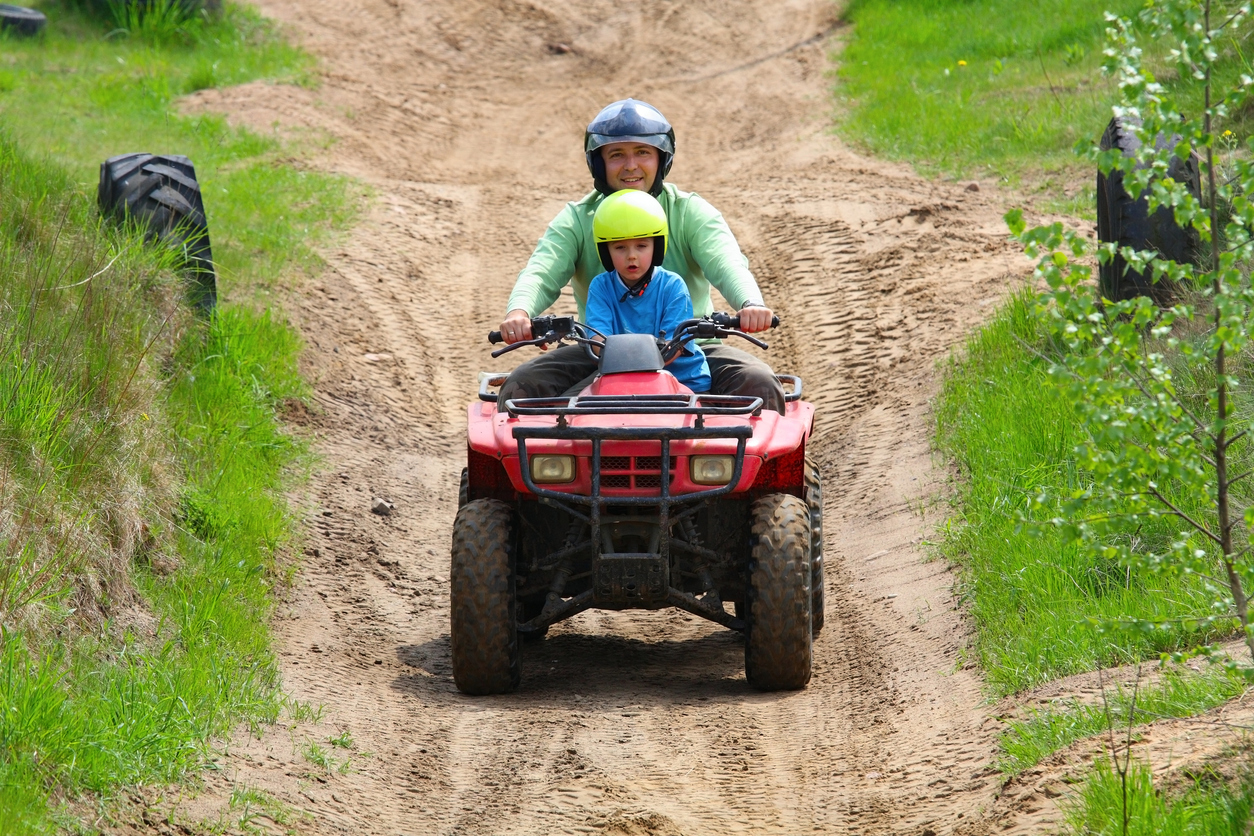
All-terrain vehicles (ATVs) are extremely popular in North Carolina for the fun and excitement they provide.  They are, however, not toys and should be respected and treated as the powerful machines they are, with some of them weighing upwards of half a ton and able to reach speeds of more than 60 miles per hour.

These vehicles are responsible for thousands of deaths and hundreds of thousands of injuries each year in the United States.  Many of these deaths and injuries may have been preventable, had the riders observed appropriate safety rules and riding tips for operating ATVs.  We'll present some of those tips here.

ATV Safety Tips

  1. Before riding your ATV, take the time to learn how.  Training can be obtained for little or no cost in most areas.  Hands-on training is available from the ATV Safety Institute, who also offer a free ATV E-Course.  You may also find training through a local ATV riding group.
  2. Always wear proper ATV riding gear, including a certified DOT-approved helmet that fits properly, safety glasses or goggles, gloves, a long-sleeved shirt or jacket, long pants and boots that cover up over your ankles.
  3. Ride on designated trails at safe speeds and on pavement only to go across roads.  ATVs aren't designed to operate well on pavement.
  4. Don't mix ATV riding with alcohol or controlled substances.
  5. No child under the age of 16 years should be allowed to drive an adult ATV.  Smaller, less powerful ATV's are designed for youngsters, but kids riding these vehicles should be supervised to help ensure their safety.  Children under six years of age should not be on an ATV, either as a driver or a passenger.
  6. The Consumer Product Safety Commission recommends ATVs with engine sizes of less than 70cc for kids from six to eleven years of age.  Engine sizes between 70cc and 90cc are recommended for kids between 12 and 15 years old.
  7. Avoid riding your ATV at night or when visibility is poor.
  8. Three-wheeled ATV's have been deemed unsafe and should not be ridden.
  9. Most ATVs are designed for only an operator and not a passenger.  Room for the rider to redistribute his weight is necessary to handle the irregularities of some terrain.  
  10. Maintain your ATV to keep it running smoothly.
  11. Make sure you and your ATV are properly insured against liability and personal injuries.  For an expensive ATV, consider comprehensive coverage.

Wednesday, July 21, 2021

Motorcycle Insurance: 6 Ways to Save


Motorcycle riders are a breed apart from your typical car drivers, glad to feel the wind in their face and undeterred by the warnings from mom about the dangers you'll find lurking around every corner.  Sure, bike riding can be risky and a serious accident on two wheels can be much more devastating than when driving on four, surrounded by a steel cage with safety add-ons like airbags.  But for careful riders with proper safety gear, a registered motorcycle safety course under their belts and a healthy respect for the risks of the road, motorcycling can be a great way to go.

Ensuring You've Got Proper Insurance

One critical piece of your motorcycling protection is having the proper motorcycle insurance in place.  In North Carolina, every vehicle being driven on public roads is required to have at least a minimum amount of basic liability insurance in case you're the cause of an accident that injures or kills another person or causes damage to someone else's property.

While it won't save you money on the cost of your insurance, carrying more than the required minimum amount of liability coverage could save you a huge amount of money in the event that you're found responsible for causing an accident where someone dies or is seriously injured and you become the defendant  in a liability suit.  Judgements in these types of suits can run into the thousands, hundreds of thousands or even millions of dollars.  Your best protection is to carry five or ten times the required amount of bodily injury liability insurance.  You may also want to consider an umbrella policy for the best all-around liability protection.

Here are six ways to save on your motorcycle insurance:

  1. Always shop around and get quotes from several insurers.  It doesn't make sense to pay higher rates charged by one company when another insurer provides the same service at a lower price.  
  2. Older, smaller, slower bikes will have lower insurance costs.  Choose your bike wisely.
  3. If you only ride occasionally, ask for an infrequent rider discount.  While you're at it, find out about every discount offered.  There may be several.
  4. If your bike isn't worth too much, dropping your comprehensive and collision coverage will save bucks.  If your bike has a lienholder, however, this won't be possible.
  5. Raise your deductible.
  6. Keep your bike secure with chains, locks and/or alarms.  Keep it garaged when not being used.

Thursday, July 15, 2021

29 Essentials for Your ATV Ride


When you're trail riding your ATV, especially when exploring far out into the back country, you'll need ways to handle whatever pops up so that your jaunt can stay safe and uninterrupted by problems for which you're unprepared.  The trick to being prepared for unexpected problems while trail riding is to be armed with a number of essentials you shouldn't be out riding without.  This includes proper insurance protection.

Whether your off-road adventure is for the day or a week, a well put together kit of off-roading essentials will help in ensuring your trip is safe and enjoyable and that you're prepared for any situation.  This may include anything from a simple mechanical repair, a flat tire or an injury requiring first aid.  All of these situations should be mere bumps in the road if you've come prepared with a comprehensive off-roading ATV essentials kit.

Your Essential ATV Off-Road Kit of Safety Equipment and Supplies

Essential items for your ATV trail ride kit fall into three categories - tools, safety equipment and spare parts.  For longer rides you'll likely need more items, but some of these essentials should be carried at all times when possible.  Here's the list.

Tools

  1. Carry your ATV's owner's manual and be familiar with key service items
  2. Adjustable wrenches or assorted sizes specific to your model ATV
  3. Allen wrenches
  4. Flat head and Philips head screw drivers
  5. Pliers
  6. Spark plug wrench
  7. Tire repair kit and air pump, either manual or 12-volt
  8. Flashlight
  9. Zip ties
  10. Roll of baling wire
  11. Duct tape

Safety Equipment and Supplies
  1. Proper riding gear
  2. DOT-certified helmet
  3. Cellular phone
  4. Maps or GPS
  5. Matches or lighter
  6. Pocket knife
  7. Small fire extinguisher
  8. Extra tire tube(s)
  9. Tow rope
  10. Power snacks such as power bars, trail mix or beef jerky
  11. Thermal blankets
  12. An experienced rider to help carry the essentials and accompany you on the ride.  You should avoid riding alone.

Spare Parts
  1. Extra fuel (in a small container)
  2. Spare tire
  3. Lug wrench
  4. Spare drive belt (depending on ATV model)
  5. Jumper cables
  6. Spark plugs

Be Prepared

These lists may appear to contain a lot of items but they cover just about everything you might need when something goes wrong on a trail ride.  An old saying tells us that the one thing you forget is probably the one thing you'll need.

Though not essential, you might also consider installing a power wench on your ATV.  They have many uses.


Can You Ever Have Too Much Insurance?


If you've ever caught yourself thinking "I'm insurance poor," it's likely because you've been adding up all those policies you've managed to collect and all those premiums you continue to pay.  If you're like most people, you have life insurance, car insurance, health insurance, homeowners or renters insurance and maybe more.  The question is, can you ever have too much insurance?

Vehicle Insurance

In the state of North Carolina, anyone driving a vehicle on public roads is required by law to have at least a minimum amount of liability insurance.  This is third-party liability coverage to help pay for financial losses suffered by others in an accident you cause.  Losses may be the result of property damage, bodily injury or death.  In NC, the minimum liability coverage required is:

  • $30,000 per person per accident bodily injury
  • $60,000 per accident bodily injury coverage for all persons
  • $25,000 per accident property damage
How Much is Enough

Many experts recommend you increase your liability limits three to five times the minimums (or more).  The amount you carry should depend upon the number of assets you stand to lose if sued for liability.  Even more protection is available through the purchase of a high-value umbrella policy.  This is a relatively inexpensive way to significantly increase your asset protection.

Other car insurance options should depend on the value/condition of the insured vehicle.  If you're driving an older, beater car that you could easily replace, carrying collision and comprehensive coverage on it probably doesn't make sense.  The money you're spending on these coverages might be better applied to medical payments or uninsured driver's coverage.


You buy life insurance to keep your dependents financially secure in case you die unexpectedly.  The death benefit should cover: 
  • Your income
  • Major debts
  • Funeral expenses
  • Future obligations such as your children's education
As you age, however, you likely don't need the coverage you once needed.  Your home mortgage may be paid off, the kids are grown and off on their own and your debts are what they once were.  In this case, you can lower your coverage to a more appropriate amount. 


Your homeowners coverage should be enough to rebuild your home and replace your property should the home be totally destroyed.  This doesn't mean covering the market value of the home or the value of the land.  Umbrella coverage can extend your homeowners liability limit.

Tuesday, June 22, 2021

11 Golf Cart Safety Tips


Whether you're using a golf cart out on the links or for driving up and down the streets of your community, there are some tips we'd like to share to help you travel safely as you go.  For many, nothing beats the relaxation provided by a nice, sunny day out on the golf course, but nothing can ruin that good time quite as much as a golf cart accident.

Golf cart accidents can cause anything from minor injuries and/or damage to catastrophic injuries and even death.  According to the Consumer Products Safety Commission (CPSC), there are approximately 15,000 golf cart related injuries annually that are serious enough to warrant a visit to the emergency room.  While some of these accidents are a result of poor manufacturing design, most can be attributed to negligence on the part of those involved.  These are preventable accidents that may have been avoided by knowing and following these tips.

Golf Cart Safety Tips

  1. Learn how to safely operate your golf cart by reading the owner's manual, if available, and follow all safety guidelines.
  2. Make sure the tires on the cart are inflated to the recommended tire pressure.
  3. Golf carts are lightweight and top-heavy, making them fairly easy to flip over if not driven properly.  Avoid sudden or sharp turns and keep your speed within reason.  The number one cause of golf cart injuries is passengers jumping or falling off the cart.
  4. Don't overcrowd your golf cart with passengers.  Everyone riding on your cart should have their own seat.  Don't allow anyone to hang out the side or back of the cart.  Overcrowding makes it easier for passengers to fall off and puts additional strain on the golf cart, making it more difficult to handle safely.  
  5. Just like with a roller-coaster, keep all body parts inside the golf cart.
  6. Just as with any vehicle, don't drink and drive or consume intoxicating substances before or while driving.
  7. Avoid distractions when driving a golf cart (or any vehicle).  This particularly pertains to cell phone use, which the CPSC lists as the number one cause of distracted driving.
  8. Use seatbelts in your golf cart.  While most golf carts don't come equipped with seatbelts, retrofitting them into your cart is fairly easy and well worth the modest cost when considering the added safety you'll enjoy.
  9. Avoid bad weather when possible.
  10. Perform regular maintenance.
  11. Have fun but stay safe!